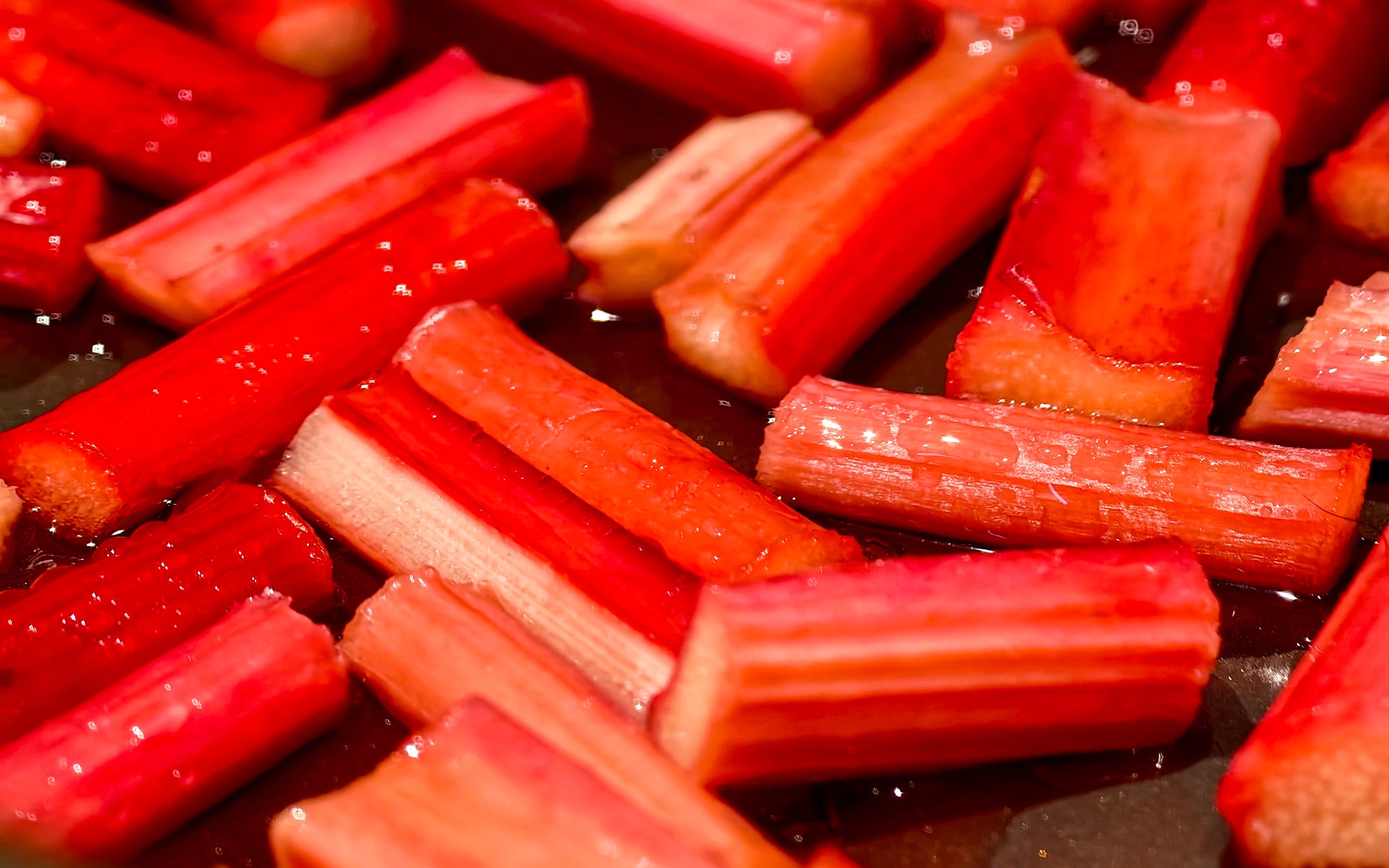
It's rhubarb season
And for once, I remembered to do something about it

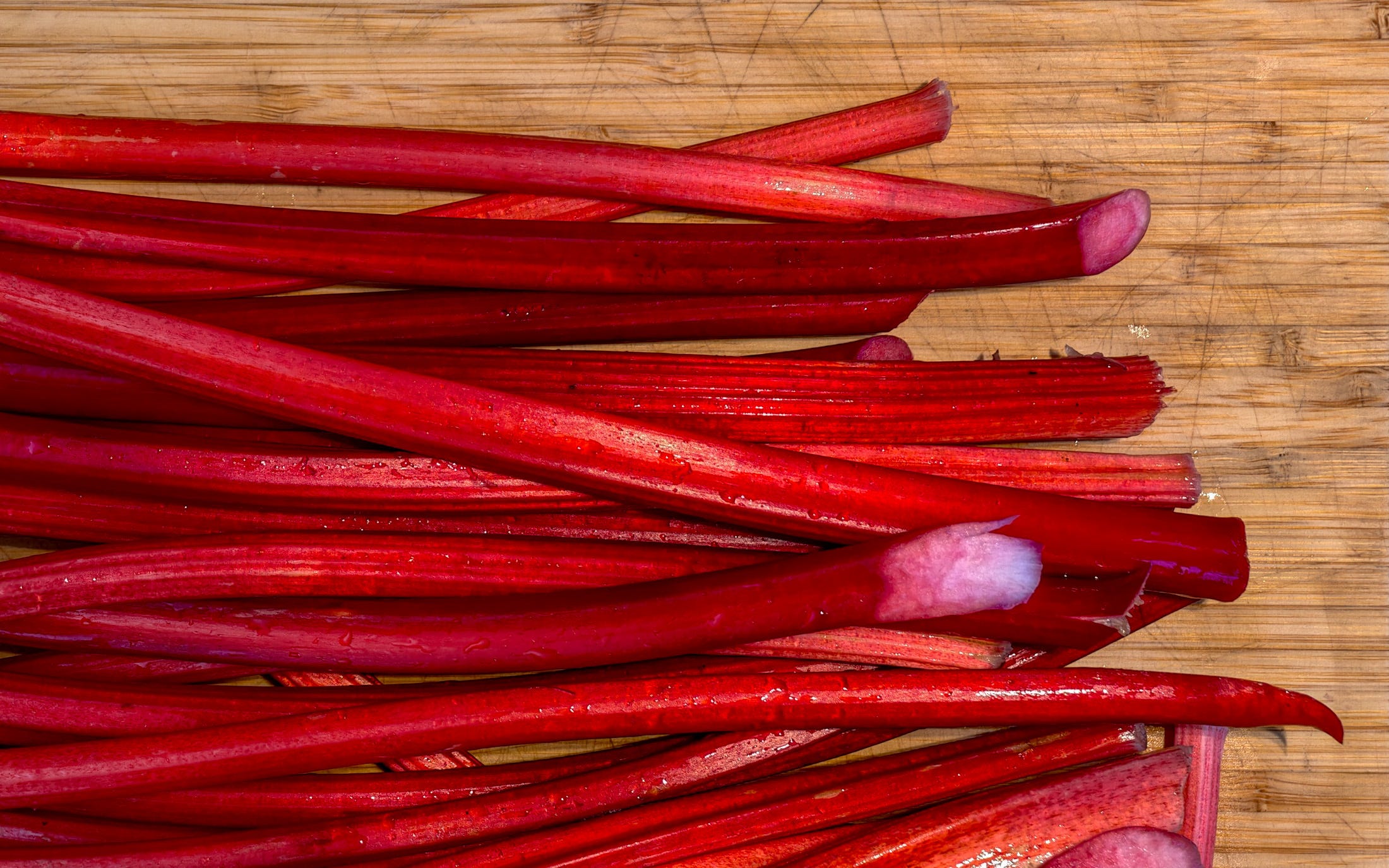
It was only when Vivian spotted the luminescent pink trays at a grocer’s stall in York’s Shambles market that we realised we’d found ourselves in Yorkshire itself during forced rhubarb season. Understandably, we weren’t going to pass it up.
Forced rhubarb is an early varietal of the plant, named for the fact that it’s forced to grow inside a greenhouse, in total darkness, tended to in candlelight, outside of its natural growth cycle. That creates a second rhubarb season, in January and February, alongside the usual spring harvest. But it also results in a type of rhubarb that’s entirely its own. Desperate for light, the stems grow longer and thinner, a perfect pink unblemished by the green of photosynthesis. It’s a little more tender in texture, and sweeter in taste, which combined with the gemlike colour makes it especially popular for desserts, cakes, and pastries.
I’m sure forced rhubarb isn’t a uniquely British phenomenon, but it is distinctively so, and the technique was apparently discovered here in the 1800s. It’s a quirk of history and geography that almost all of its production is found in Yorkshire, and specifically the so-called Rhubarb Triangle, an area of farmland delineated by Leeds, Wakefield, and Bradford. So on finding it there, in nearby York, in the dark depths of January, you can understand why we bought a couple of kilos’ worth on the spot.