

Impala, W1
Lower your expectations

If it was ever possible to visit Impala free of expectations, that brief window has long since passed. Inarguably London’s “hottest” restaurant opening of the year, it dominated the broadsheet review cycle, took over my Instagram reels, and even drew an elusive Jonathan Nunn review. According to the coverage, it’s as inventive as it is impressive: Grace Dent said it is “like no restaurant I’ve ever been to,” David Ellis called it “a brand new type of restaurant,” Giles Coren declared it “a truly original meal.” Impala inevitably became the city’s trickiest table to secure.
By the time I made it along, three months after opening, that initial hype had clearly dissipated. As I write this review, at 4pm on a Tuesday, there are tables free tonight. But while the attention economy might have moved its baleful gaze elsewhere, those early expectations had been set, and I found it hard to shake them. Expectations like that have weight, heft. They shift perceptions, set the framework for your experience, make the difference between a pleasant surprise and a drab disappointment.
Impala was meant to redefine London dining. Could any restaurant ever live up to that promise?
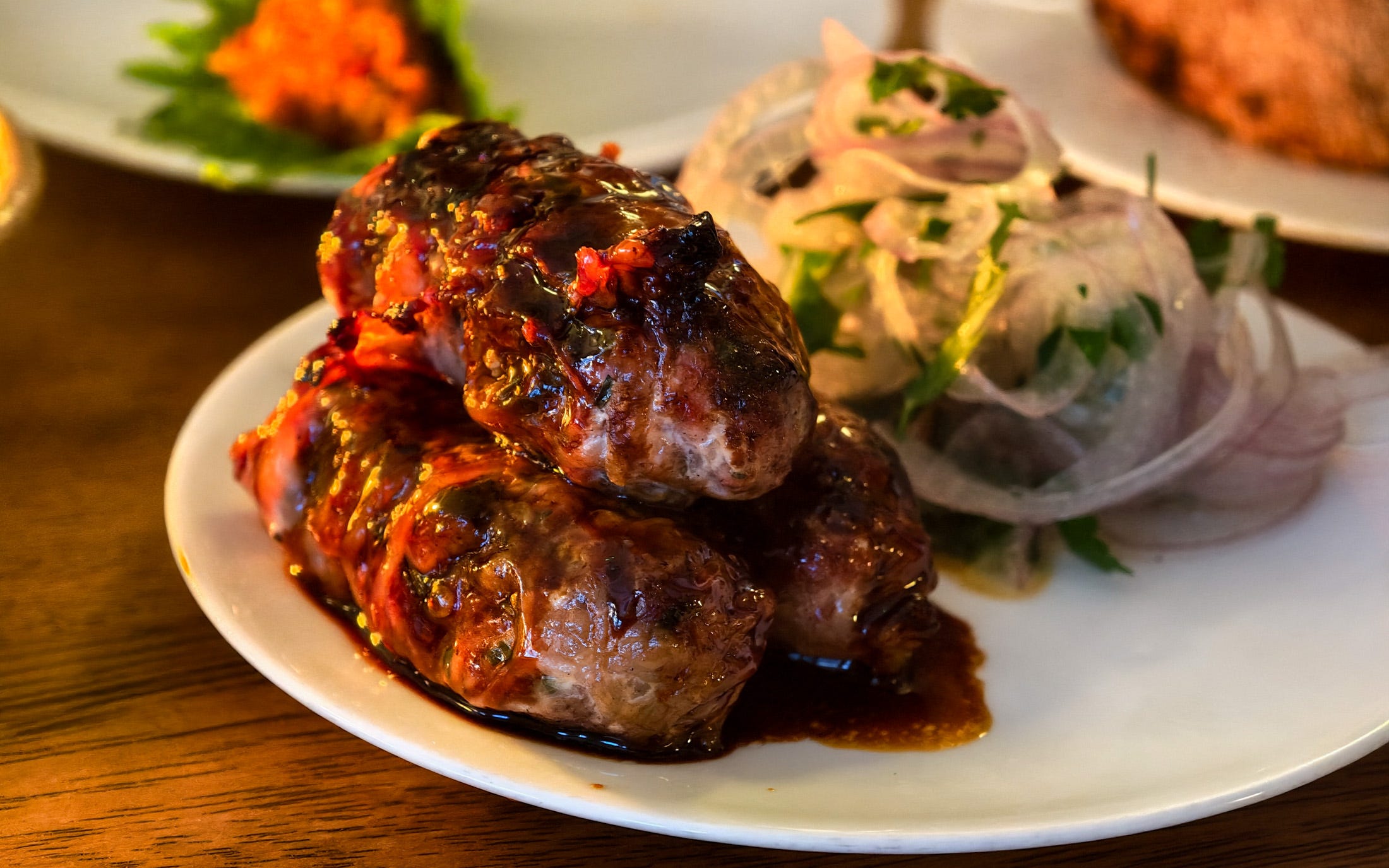
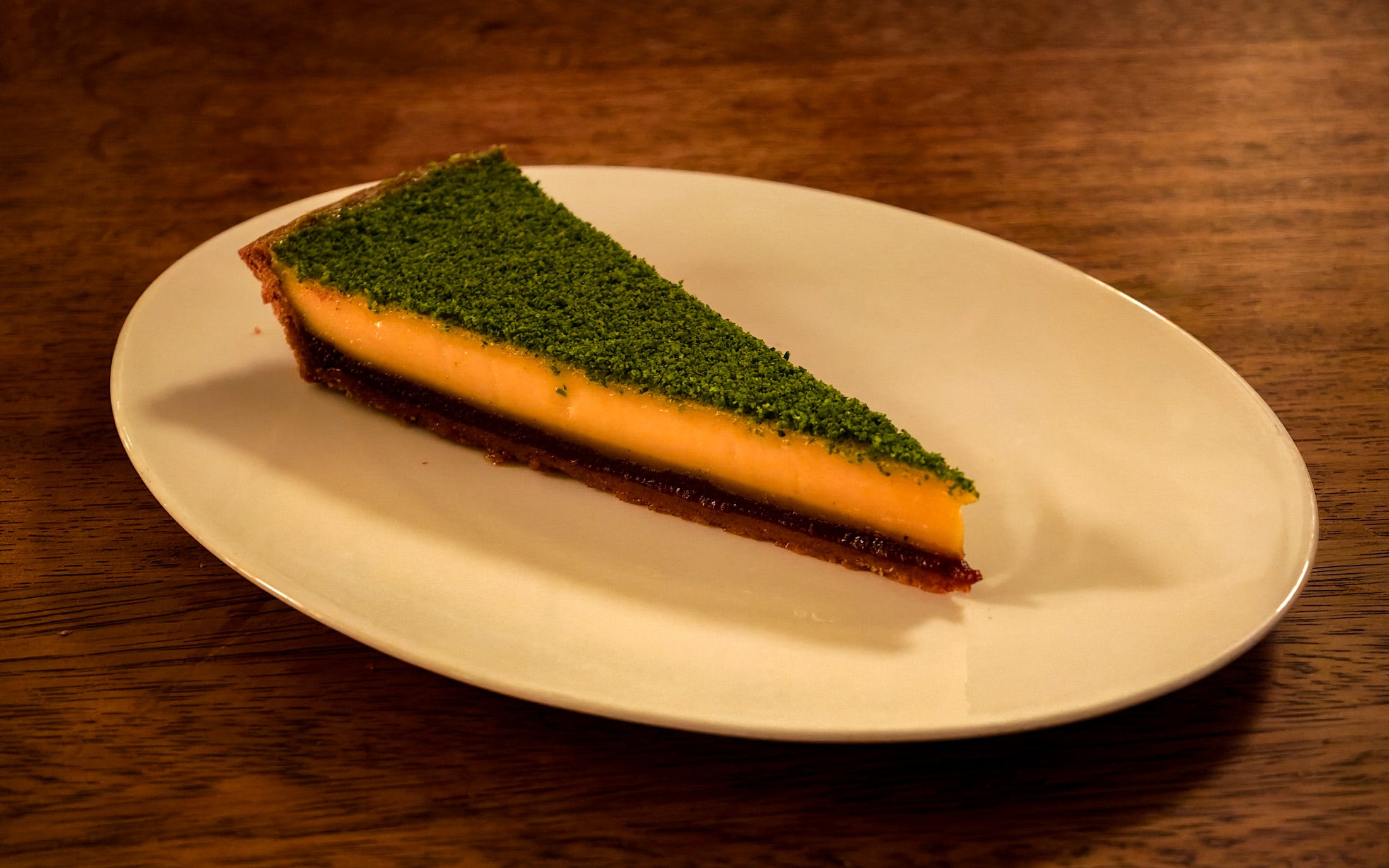
Impala, I’m afraid, could not — though I see glimpses of the extraordinary restaurant that almost every other critic ate at. There are the Tamworth pork sheftalia, thick and fatty, the loose meat crumbling into a silky sauce; a heap of slivered onions sit alongside, their sharp sweetness delivering a necessary note of contrast. Or the single sweet option, a delicately layered tart of dense date, quivering custard, and a fine grating of deep green pistachio. It holds down dessert by itself with aplomb.
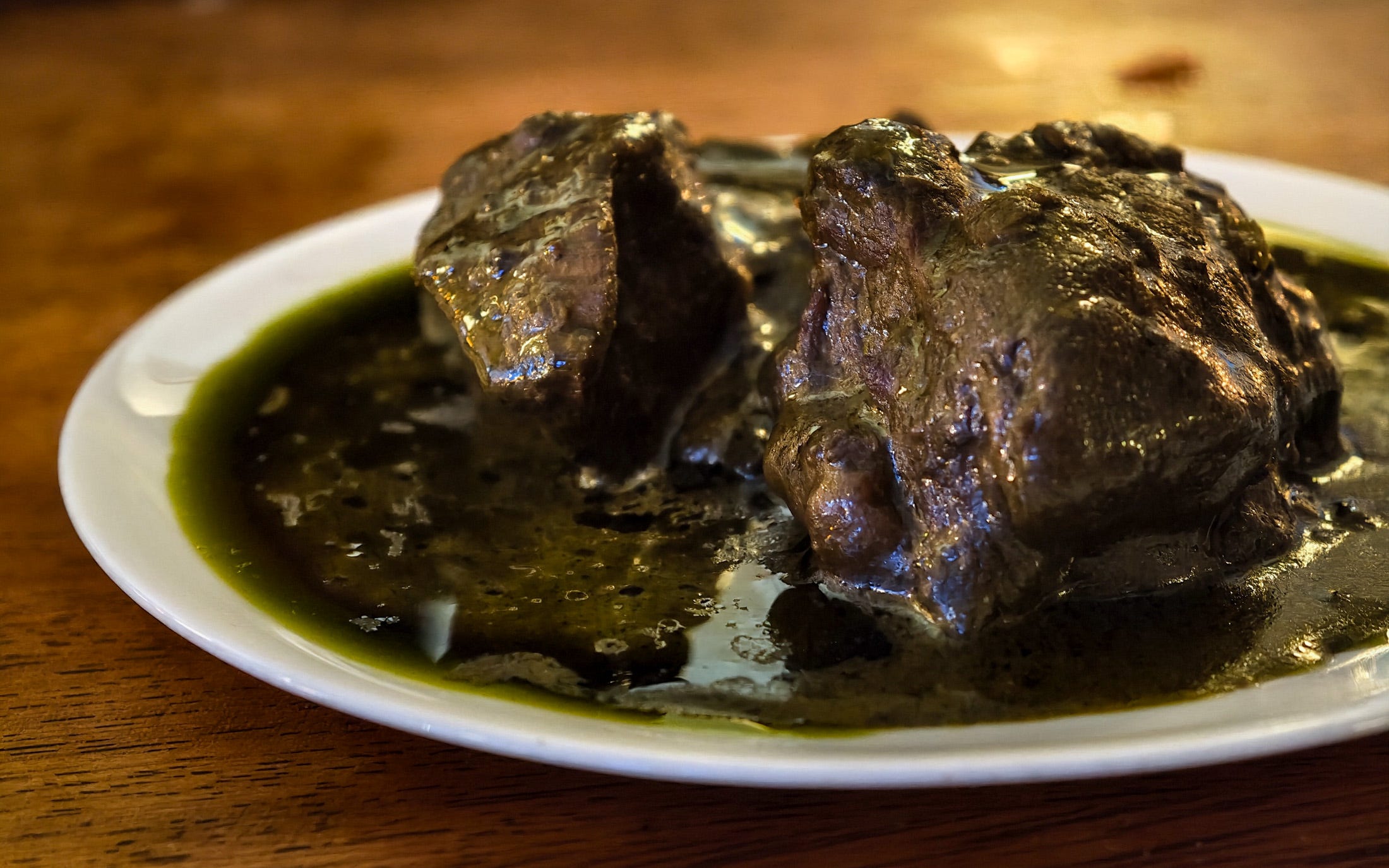
Molokhia proves the night’s undisputed highlight, and the only dish that might seriously tempt me back. It’s so confidently ugly that it could only be exceptional, hulking mounds of Cull Yaw mutton slumping in an unctuous ink-black stew, its green fringes the only thing to differentiate from a bowl of crude oil. It’s deeply savoury, with the soft bitterness of mole, ready to be mopped up by the kitchen’s soft, nutty wholemeal flatbreads.
Nominally north African, Impala’s shaggy, overlong menu sprawls across the region. It’s the rare occasion when I’m genuinely relieved to be offered some explanation by our server, as there’s little rhyme nor reason to how the savoury dishes have been split across four sections, and without guidance I wouldn’t have known how to plot a course through. Given the odd order our dishes arrived in, appearing in dribs and drabs from across the menu, it’s not clear the kitchen quite knows the best route either.
The dining room is perhaps Impala’s greatest asset, but undoubtedly its least original. The restaurant comes from Super 8, the same group responsible for the likes of Smoking Goat, Kiln, Brat, and Mountain. Like those it has been precision-engineered for vibe, grill flames illuminating exposed ducting and bare concrete, drying ducks and aging fish dangling conspicuously in the open. This is simultaneously a room everyone here wishes to be seen in, and one where you’d happily take your parents for a nice dinner out. Staff buzz around in impeccably beige chore coats, an army of Bond villain henchmen that seem to have been hired at a ratio of one per table, and yet still manage to lose a drinks order and forget to bring us our bill.
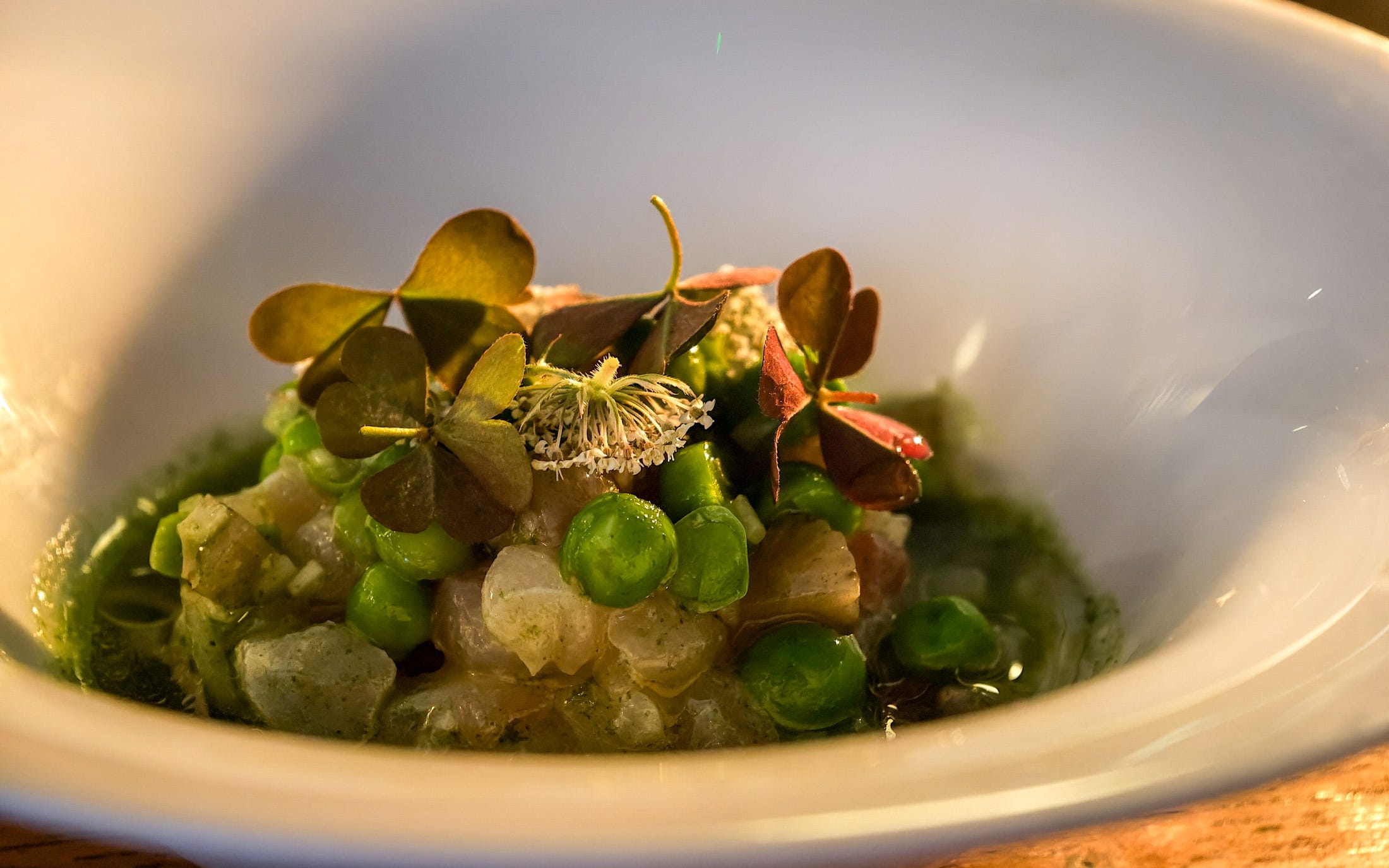
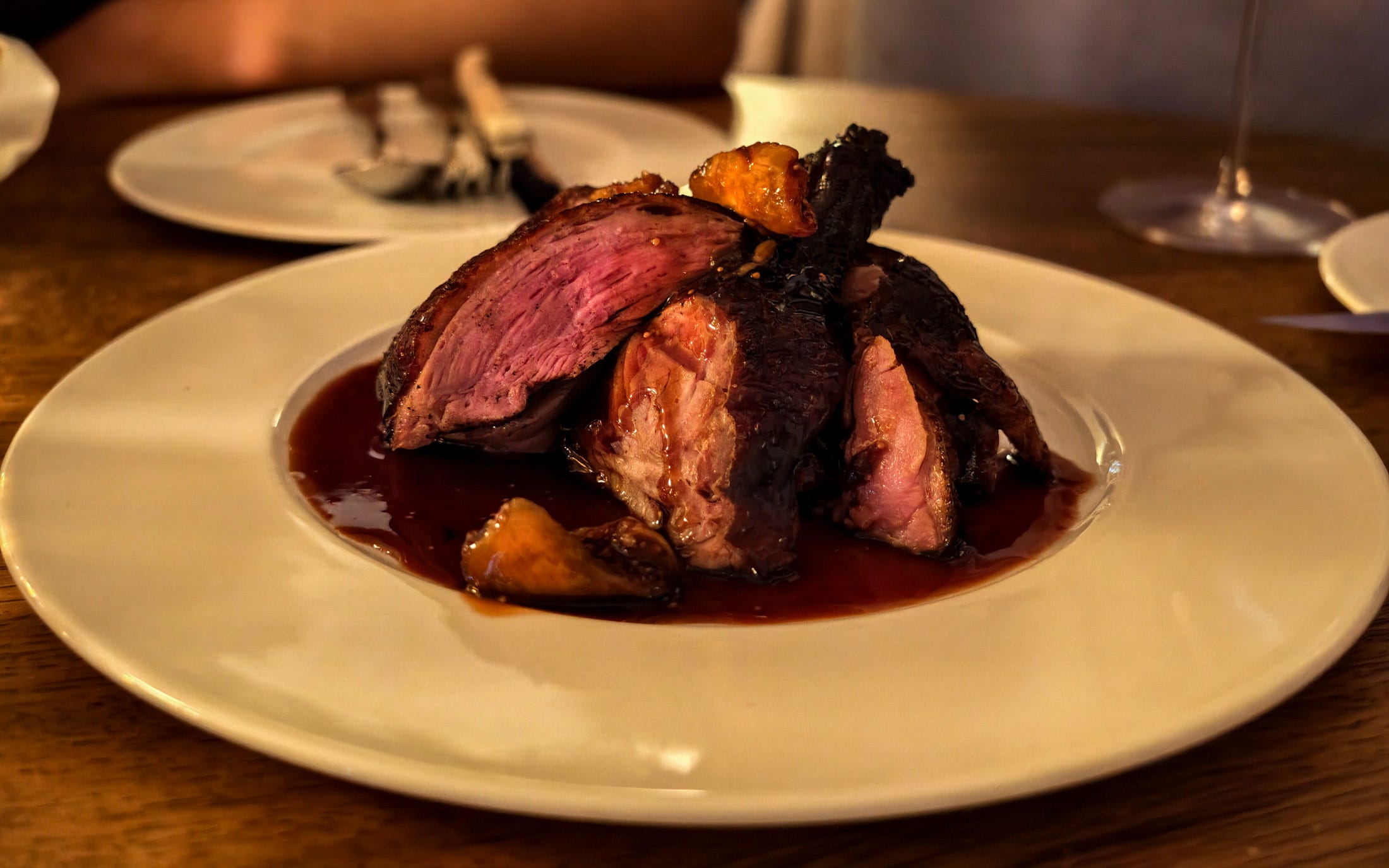
Everything we eat is good, but most of it is unremarkable. A sea bass crudo is led by the sweet notes of spring peas and mashua root, the fish itself reduced to a vehicle. The grilled squid in an over-spiced harissa salad suffers much the same fate. I prefer the sweetbreads, served with salted onions and a rich jus that amplifies their meaty side, offal made impressively inoffensive. A half-duck roasted in molasses has the glossy, fatty skin you’d hope for in Hong Kong, but the syrupy fig sauce drizzled on it tableside has a deadening, one-note effect. Perhaps this all sounds deeply critical, and I suppose it is. If Impala had come out of nowhere maybe I’d have been drawn more to the sweetbreads’ strengths, the duck’s dense flavour; but I’ve been told again and again that Impala is the best restaurant London has produced in 2026, and when that’s the standard, it’s the flaws that come into focus.
Impala’s pricing helps set the bar high too. White crab kibbeh in shiso leaf are tasty enough, but at £7 per bite I’d hope to be slightly more wowed. We pair our duck with a barigoule of courgette and piattone beans suspended in yoghurt; it’s rather good, but £14 should get you more than a few spoonfuls of vegetables. Our sweetbreads cost £36, the duck £68. In total we spent well over £100 a head, ordered more than the restaurant suggested, and left feeling peckish. I should give Impala’s sommelier credit though: wine starts at an unexpectedly friendly £7 a glass for some creditable Spanish options on tap; the house martini isn’t bad either.
No restaurant could bear the weight of Impala’s expectations. I’m sorry to report that it hasn’t reshaped north African cuisine or invented an entirely new type of restaurant, though I rather wish it had — that sounds fun. It’s simply another good opening in the tried-and-tested Super 8 mould. I might have loved a smaller, more focussed version of Impala; I merely like this one. But I wasn’t supposed to like Impala. It was a city-straddling giant, a culinary colossus on a campaign to awe and inspire. Liking it doesn’t really feel like enough.
I can only hope that reading this has lowered your expectations — then you might enjoy it rather more than I did.
This trend of hyperbolic reporting about restaurants is a regular albatross here in Dubai. It manifests a threat to restaurants. A review of mine about a Mexican taqueria recently is getting some mild backlash on Instagram, and I am increasingly of the view that any write up that doesn't slather praise is damned as heretical. In Dubai at least, there is no room for nuance left and I think we are all worse off for it.