

Camille, SE1
Mood-altering cooking

I was in a pretty rotten mood when I arrived at Camille on a quiet Tuesday night two weeks ago. Work had been long and intense, a 10-hour day with no real break to speak of, and a long, boozy, celebratory dinner was just about the last thing I wanted at that precise moment in time. All of which is only to give testament to the Camille kitchen, which turned out one of the most joyous meals I’ve had all year when I came in primed for nothing of the sort.
It started with a martini, which felt like the quickest way to turn things around. Camille’s is a dirty vodka variant, shimmering and hazy with salt-heavy brine. At £13 it sets a precedent for pricing that’s premium but never outrageous — well, except for charging £6 for two-thirds of a pint of Stella — and reminds that this is a restaurant where you should expect to splurge.
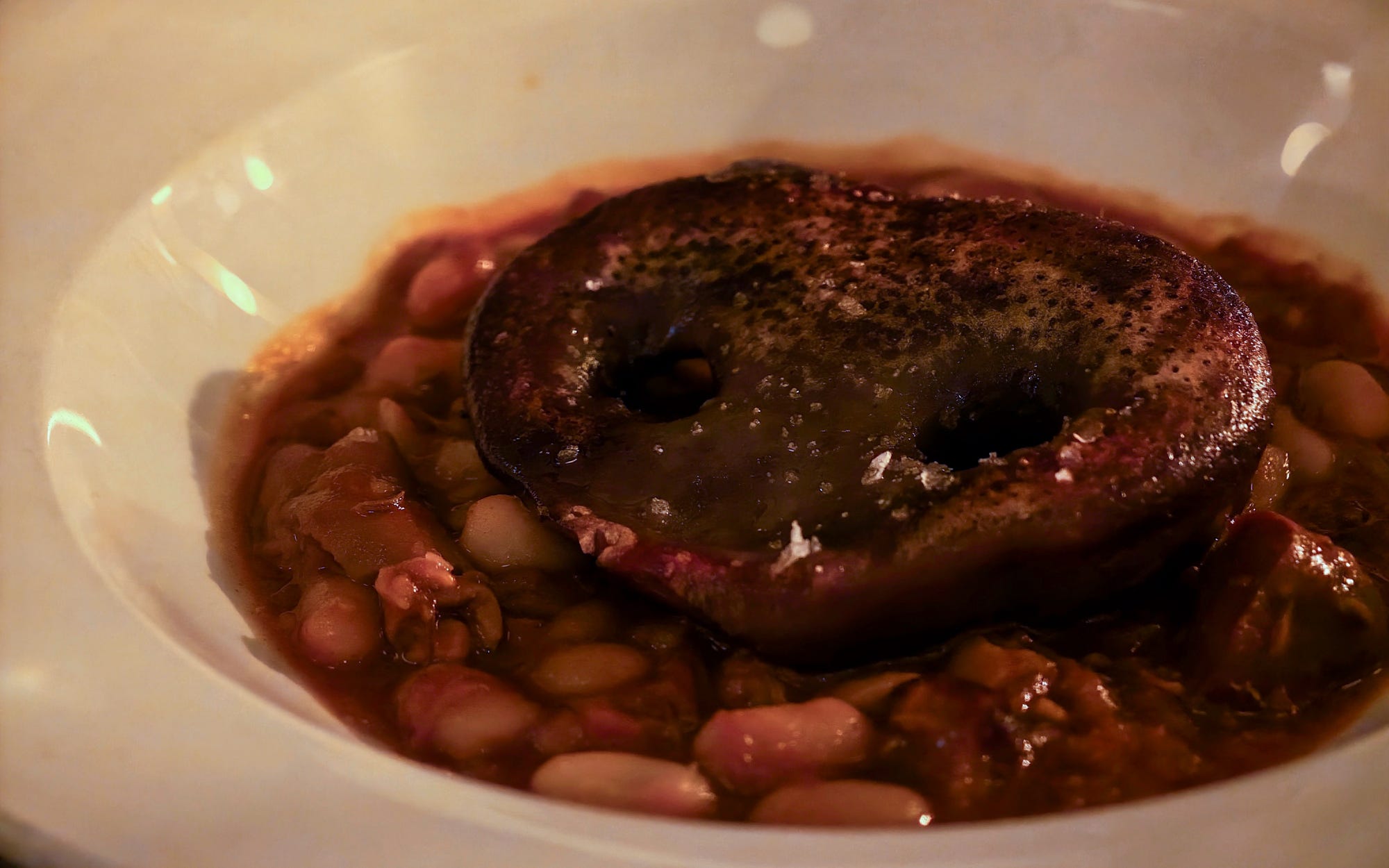
Camille comes from the group behind Soho’s Ducksoup and Dalston’s excellent Little Duck the Picklery. While those are both loosely modern European in approach, Camille is distinctly French, the menu running the gamut from baguettes to bisque, canelé to choux — about the only thing missing is a complimentary Gauloise. In fact, the night we’re there the menu seems to be positively revelling in Francophilia, nowhere more so than a cassoulet topped by an entire, intact pig snout, quivering gelatinously on its bed of beans, paprika, and an unctuous stock made from both trotters and veal. This could be a parody of French cooking if it weren’t so damned good about it, and we slurp down every bite.
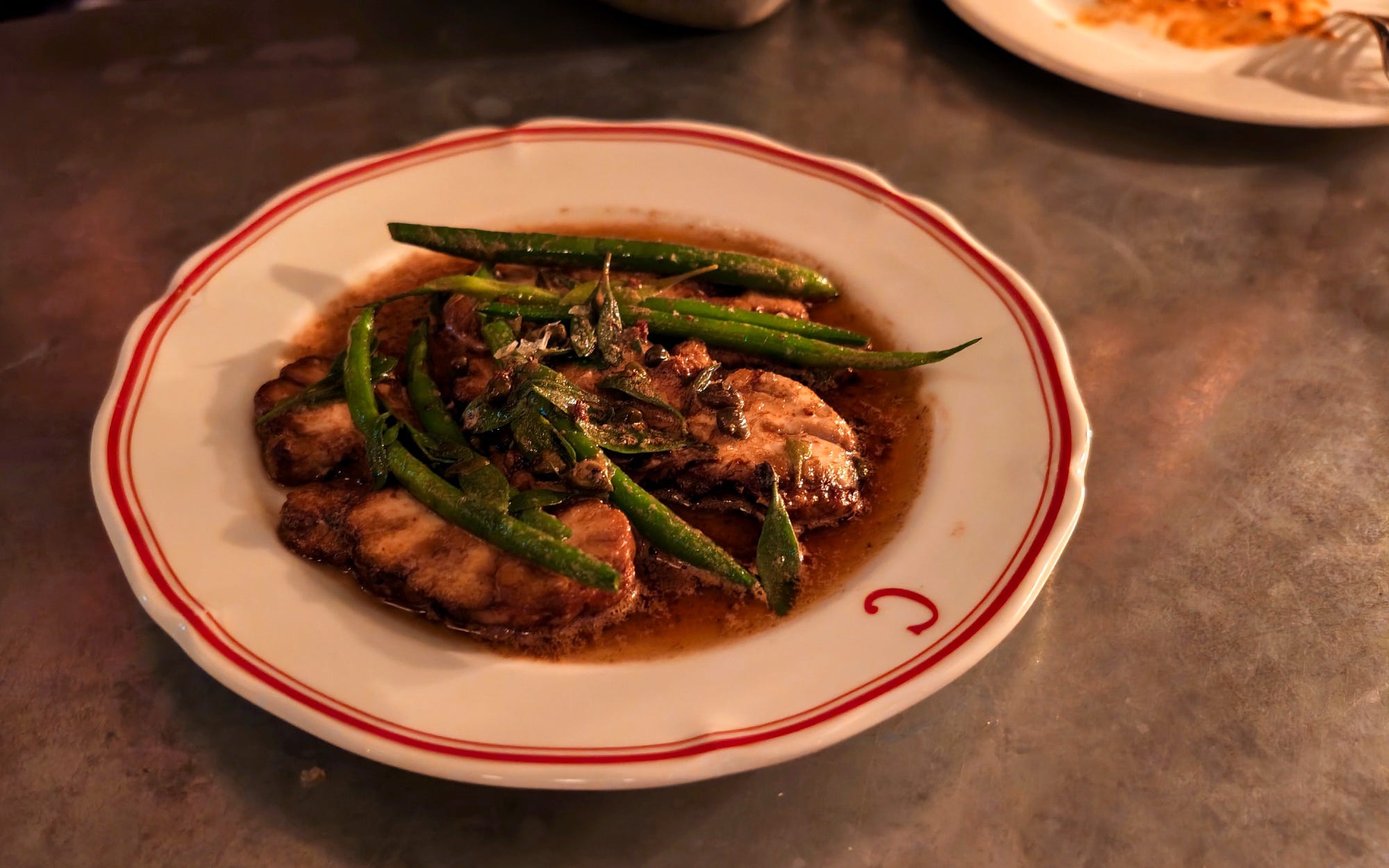
That snout isn’t the only nod to a nose-to-tail approach that runs through Camille, and no doubt owes at least a little to chef Elliot Hashtroudi’s four years at St. John. There’s a snack of crisp puffed pig skin — pork scratching by any other name — topped with smoked eel and tarragon. Steak au poivre is expanded by the accompanying heart, liver, and kidney, building contrasts in texture and taste that a single slab of meat simply can’t compete with. Calves’ brains, served in soft slabs with green beans and sea purslane, are drenched in an intense sauce that punches clean through the braininess of the whole enterprise.
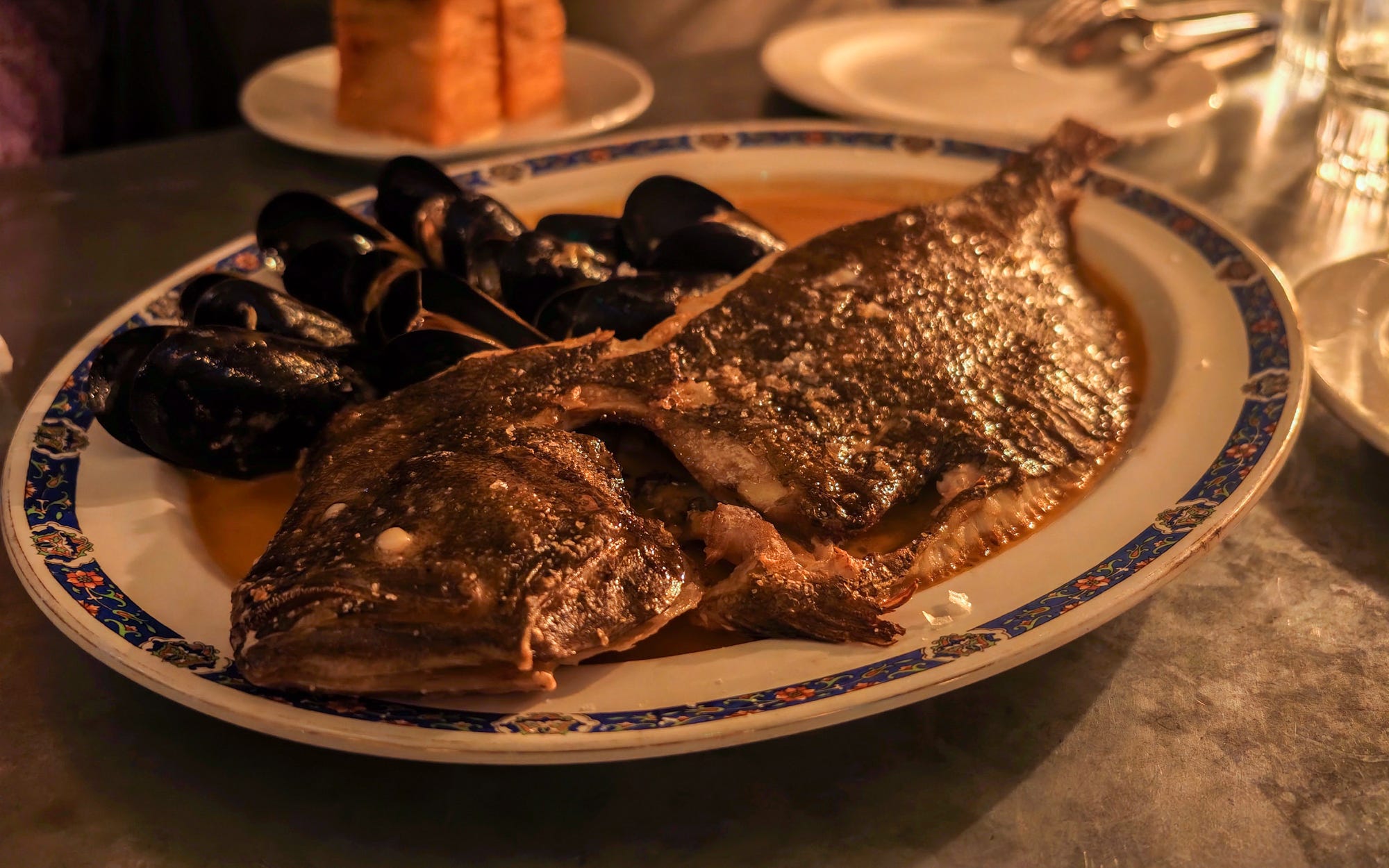
Still, you needn’t be a card-carrying member of the St. John brigade to have a good time at Camille. In fact, the evening’s highlight was perhaps the most approachable dish we ordered: a whole Cornish brill, flanked by a bed of mussels and blanketed in crab bisque. I could sing songs of this bisque, I could eat bowls of it, throw back pints’ worth. We ordered two extra portions of bread just to make sure not a drop of it was wasted, and twice denied our beleaguered waiter’s attempts to clear the dish because we feared there were a few scraps left to mop up. If I knew it was on the menu I would happily slink into Camille by myself for a weekday lunch and drop the £56 for more fish and bisque than I could possibly hope to eat alone, and leave stuffed, happy, and hopefully gentled sozzled by another of those dirty martinis.
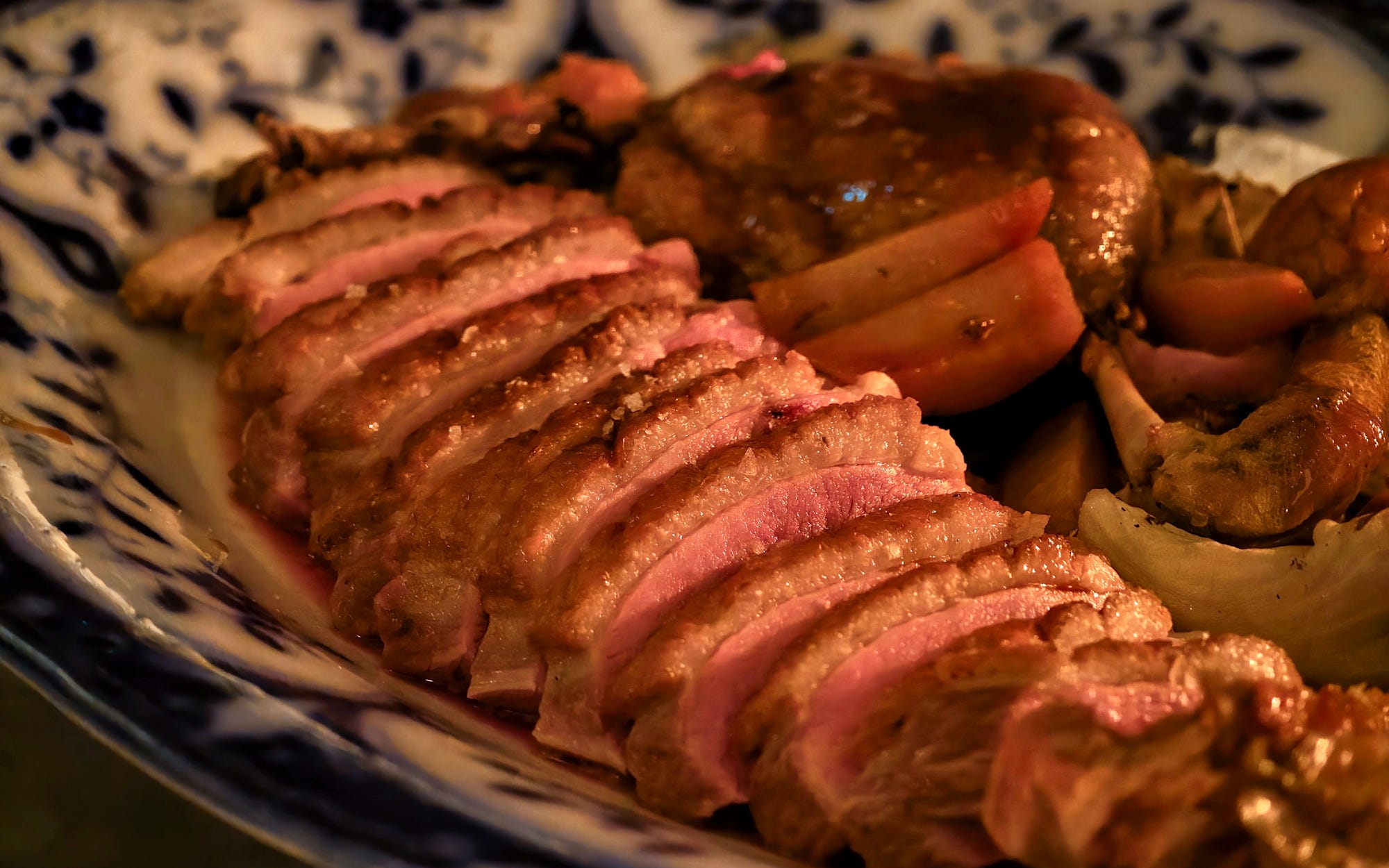
A half roast duck is almost as impressive, the breast cooked perfectly pink while the leg collapses into a soft heap under its fatty skin. Quince jelly adds a soft touch, bitter leaves a harsher note, the whole lot marries into a marvellous whole. I was also absolutely taken with a starter of mutton tartare, which could have been interesting enough in its own right but is elevated further by a gentle hint of harissa and a soft dusting of Scottish sheep’s cheese. That’s just one of many ingredients on the menu that are quite pointedly British, a welcome concession to locality in the face of undoubted temptation to import from across the Channel.
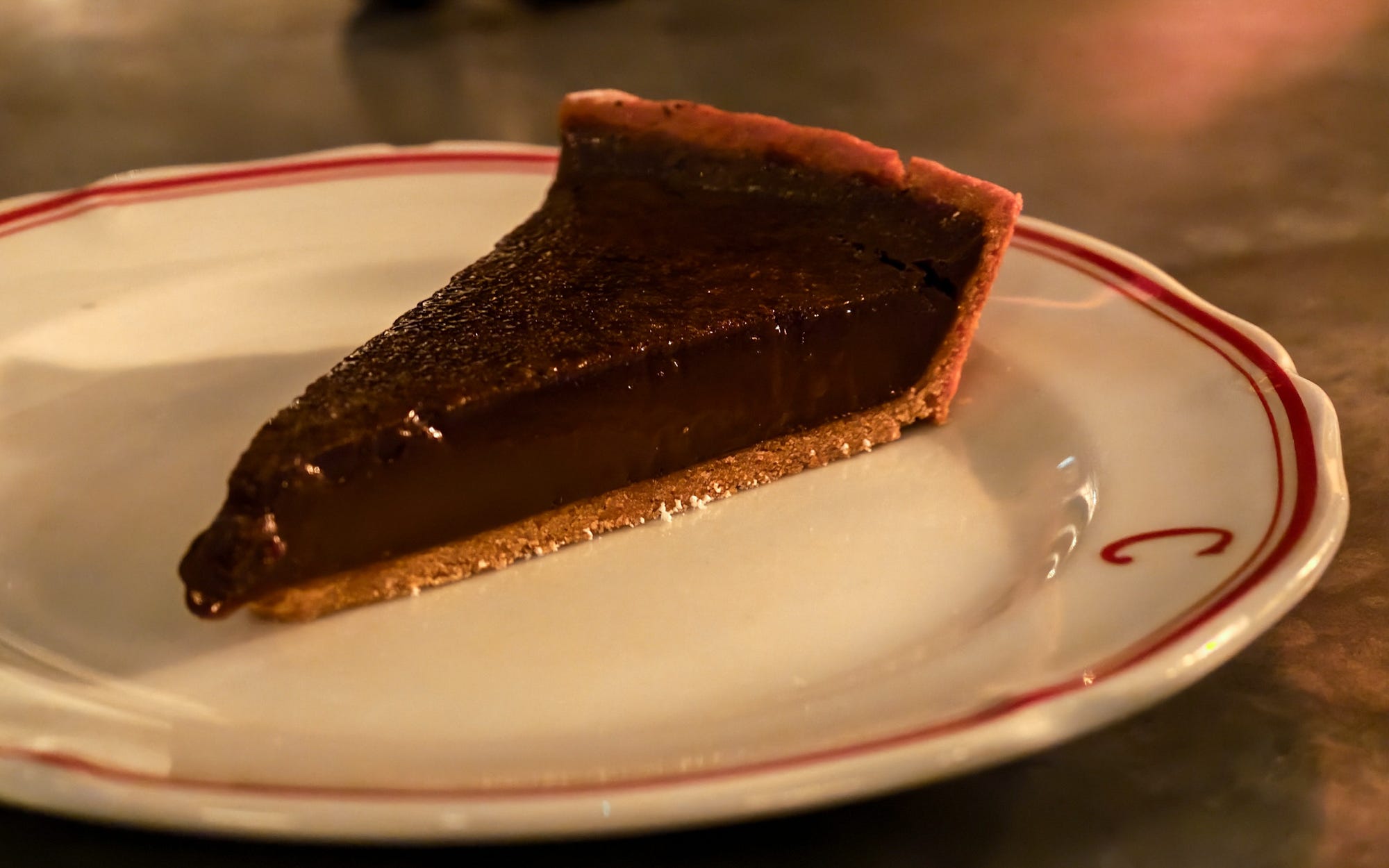
And then there’s dessert. I walked into Camille with just one dish on my mind: the burnt milk tart (blame Instagram). Camille, I am told, always has a tart, and on the strength of this one you shouldn’t ever miss it. Described by Hashtroudi as a cross between crème brûlée and custard tart, it boasts a blackened sugar top you can crack open, revealing an oh-so-soft body that gives way at once. The burnt milk brings a touch of bitterness, making it almost chocolatey without any chocolate, and all too moreish for it. I could quibble and say that the pastry itself ran a little soft for my liking, but I’d be hard pressed to complain too earnestly given how much I was enjoying everything else about it.
We inevitably bring a lot of our own mood into a meal. Holiday lunches always feel more relaxed, birthday dinners prime you for a raucous time. But it’s rare for a restaurant itself to be so capable of shaping that mood, for cooking to turn your night around — and when it does happen, it’s usually in the opposite direction. But across three hours and change, Camille didn’t put a foot wrong, righting the course of my night dish by dish (and glass by glass, let’s be fair here). This is exceptional, mood-altering cooking, and I struggle to remember a meal I’ve enjoyed more this year, grumpy start be damned.
I’m so glad you liked Camille. It’s truly one of my favourites in London right now. And, as you say, the food is just go gaga good.